
Grinding rollers, tyres and roll surfaces cast in high manganese steel with TiC-insert alloy bar reinforcement — for HPGR and vertical roller mill duty.
Two different machines use the same principle. A high-pressure grinding roll (HPGR) presses material between two counter-rotating rolls at high force, so the roll surface takes abrasion and very high compressive load at the same time. A vertical roller mill (VRM) grinds a bed of material under rollers running on a rotating table.
In both cases the roller body, tyre or roll surface is the wear part. Wear does not land evenly: the centre of a roll normally wears faster than the edges, and on a VRM the leading edge of the tyre takes the worst of it. Once the surface is no longer uniform the grinding bed becomes unstable, throughput drops and the product fineness moves.
There is also a maintenance question. An operator welding hardfacing onto a roll every few weeks is not buying a wear part — they are paying for downtime in instalments.
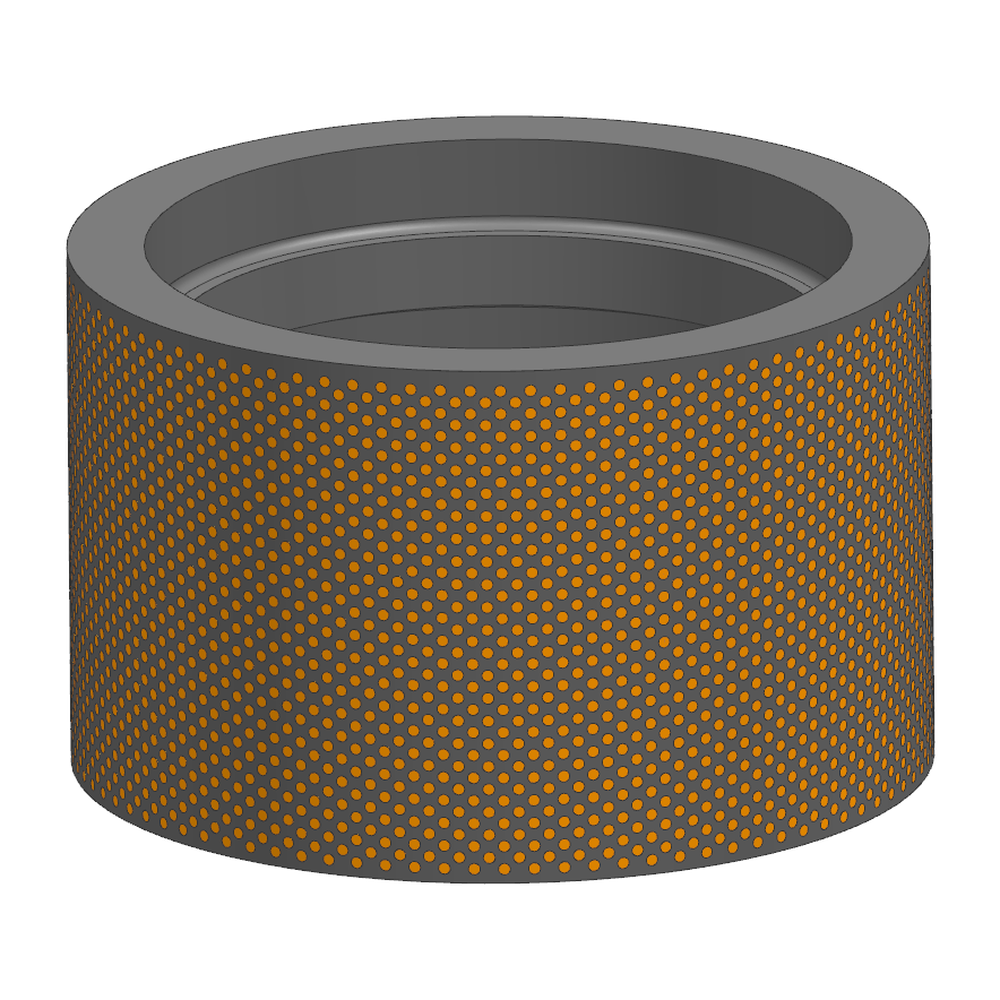
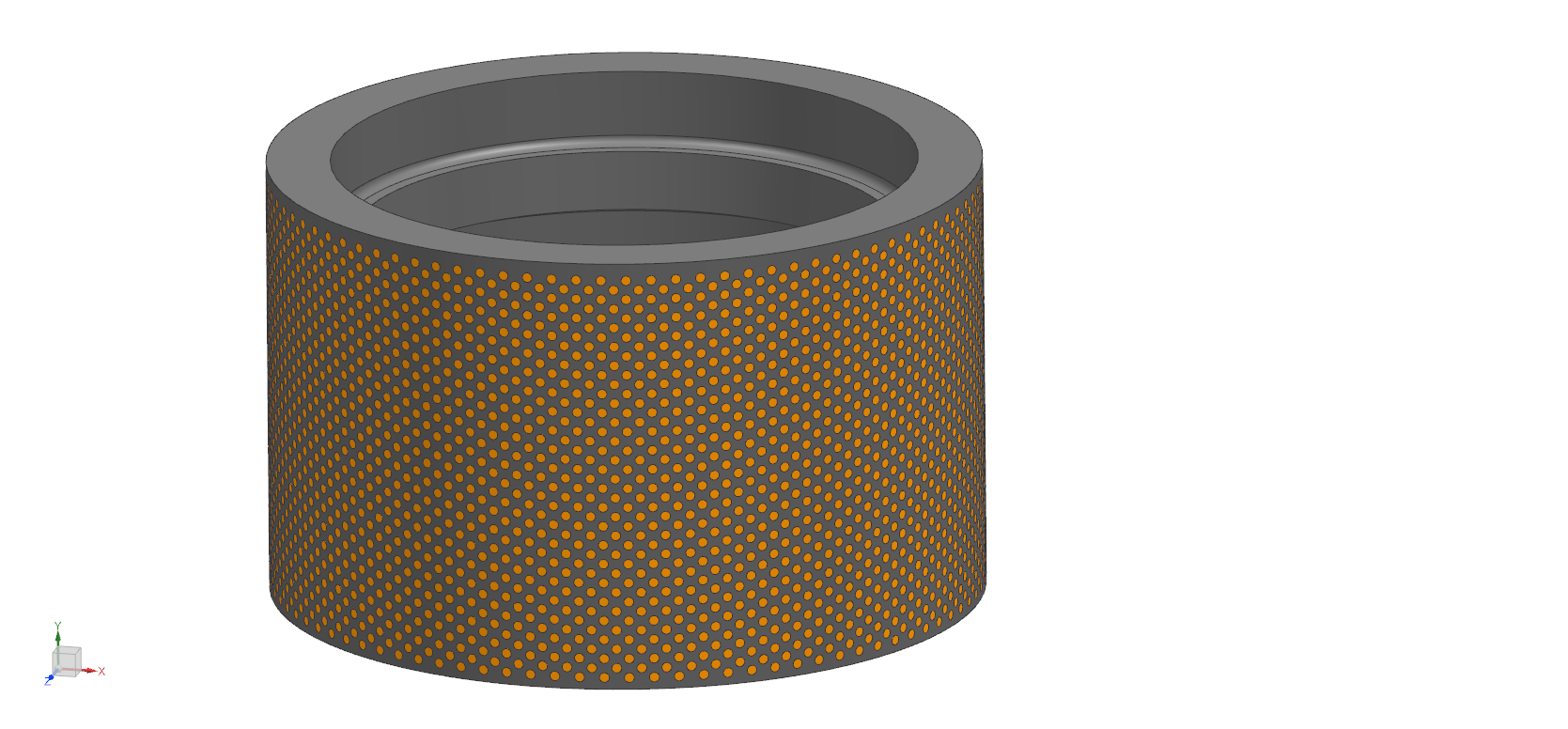
A roll face does not wear flat. Pressure is highest where the material bed is densest, and that is where the surface goes first.
Where the bed is thickest and the force is highest. Usually the first area to lose its profile — and the profile is what makes the grind work.
Lower pressure but fully exposed. On a VRM tyre the leading edge takes the worst abrasion; on an HPGR the edges feed material back into the nip.
Because the wear is not even, the insert layout is not even either: density is set where the pressure is, and the tyre edge is laid out to keep working for the whole campaign rather than the first half of it.
A grinding circuit is bought on cost per tonne ground. These are the six places that number gets away.
A roll wears fastest where the material is densest. Once the profile is no longer uniform the pressure distribution follows, and so does the grind.
Building a roll up by welding means the machine is out of service at a regular interval, and the result varies with whoever is holding the torch.
Crushed or loose carbide studs leave their holes and end up in the circuit downstream.
Roller maintenance in a cement or minerals line has to fit the kiln or mill campaign, so wear life is planned months in advance.
Once the profile has gone, the roll has to come out for machining or rebuild — a heavy job inside a narrow window.
What the grinding circuit needs is a predictable cost per tonne ground, not a cheap part with an unpredictable life.
Cost per campaign: a composite roller costs about 1.4× a plain manganese roller and returns roughly 2× the wear life — plus the intervals between rebuilds, which is where the real saving sits. Against a carbide-bar composite of the same layout it lands at about 75% of the price.
| Over one campaign | Weld hardfacing | Composite roller |
|---|---|---|
| Roller purchase | Lower | ≈ 1.4× a plain roller |
| Scheduled stops for build-up | Every few weeks | None between changes |
| What the result depends on | Whoever is holding the torch | Cast and heat-treated as one part |
| Profile at the end of the campaign | Built up, not reprofiled | Still uniform |
| Cost per tonne ground | Baseline | Further down |
Comparison assumes the same mill and the same duty. The deciding numbers are cost per tonne ground and the production hours the mill keeps running.
HPGR and vertical roller mill duty. If your machine is not listed, send the part number or a photo and we will confirm it.
Tell us the machine model and the part you are running now, and we will come back with the composite option measured against it.
A part number, a drawing, or a photo of the worn surface with the machine model is enough for us to identify the fitment. Tell us how the roll currently wears — centre or edges — and we will lay the insert out for that.
How an order runs: confirm the roll geometry and the wear pattern → map centre against edge → set the insert density for each band → 3D-print the pattern and machine the mould → cast, heat-treat and machine the profile.
Send us your roll or tyreAll manufacturer names, part numbers, model numbers and descriptions are used for identification and reference purposes only. It is not implied that any part listed is the product of the original manufacturer. Wear performance figures are laboratory values for the wear alloy itself and are not field-service guarantees. Patented in China (CN106282835B).