
Hammers cast in high manganese steel with TiC-insert alloy bars through the head — for hammer crushers, hammer mills and shredder duty.
A hammer crusher breaks material with hammers pinned to a spinning rotor. The hammers strike the feed and drive it against the breaker plates and the grate, so the hammer head is both the impact tool and the wear surface.
Depending on the machine, hammers run in rows on a single rotor or in a ring hammer arrangement, and they are normally replaced as a balanced set. Two failure modes dominate: abrasion of the head, and breakage around the pin hole once the head has worn thin.
The material matters too. Hammer duty covers limestone and gypsum, but also demolition debris, asphalt and shredder feed, where the impact load is unpredictable and a brittle head does not last.
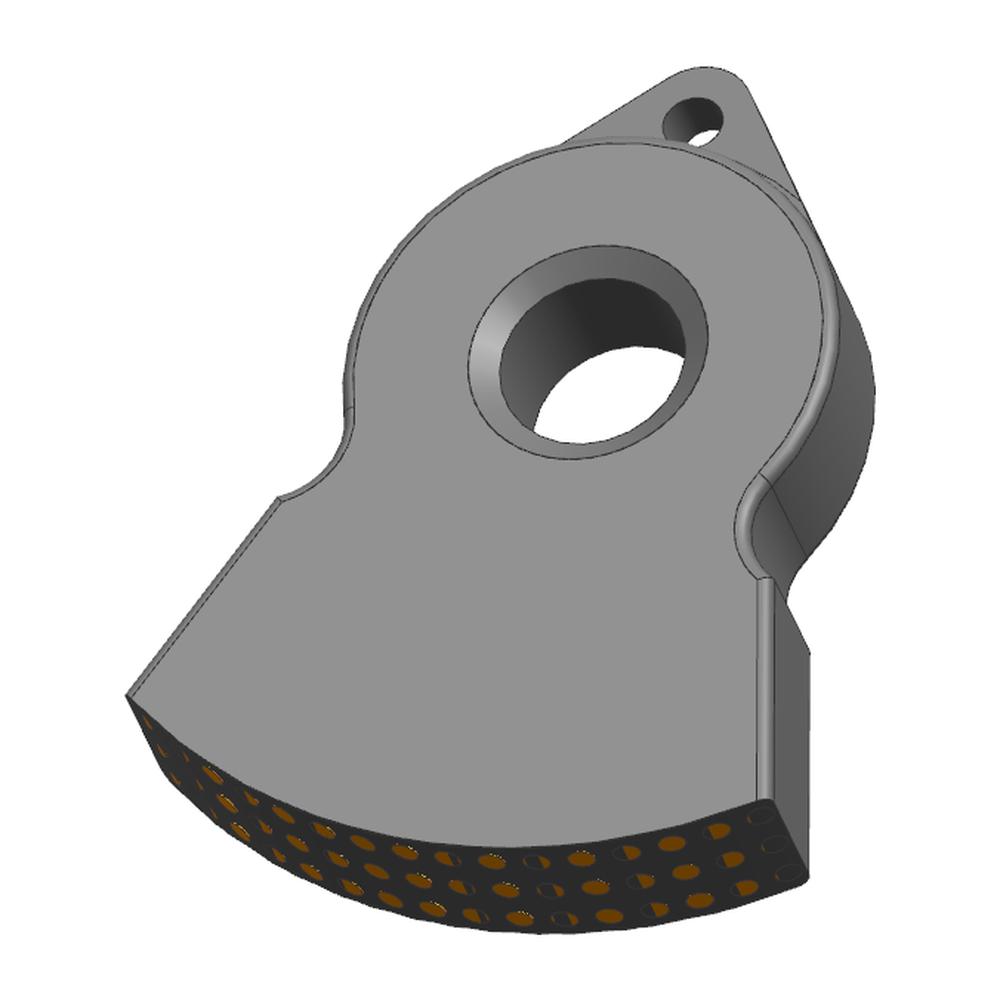
A hammer rarely fails because the head wore out. It usually fails around the pin hole — and that is a design question rather than a wear question.
Progressive and predictable. The head rounds off, output drops, and the change gets planned into a window.
Sudden. Once the cast section around the pin has thinned, the hammer lets go — and takes the grate and whatever is downstream with it.
The insert layout and the cast section have to be decided together: the wear bars carry the abrasion, but the metal around the pin hole has to remain the last thing that fails.
Hammer failures are not all wear failures. These are the six costs that come out of the same box.
Once the head has worn back the pin hole becomes the weak point. A hammer that breaks in service can take the grate and the rotor with it.
When the head rounds off it pushes material instead of breaking it. Capacity falls away and the recirculating load rises.
Hammers are balanced and replaced together, so the cost that lands on the maintenance budget is the cost per set — not per hammer.
Feed surprises crack brittle hammers. Toughness is not optional in this duty.
A broken hammer does not just stop the crusher — it can wreck the grate and send scrap into the next stage of the plant.
A cheap hammer that breaks early costs more per tonne crushed than an expensive one that wears out predictably.
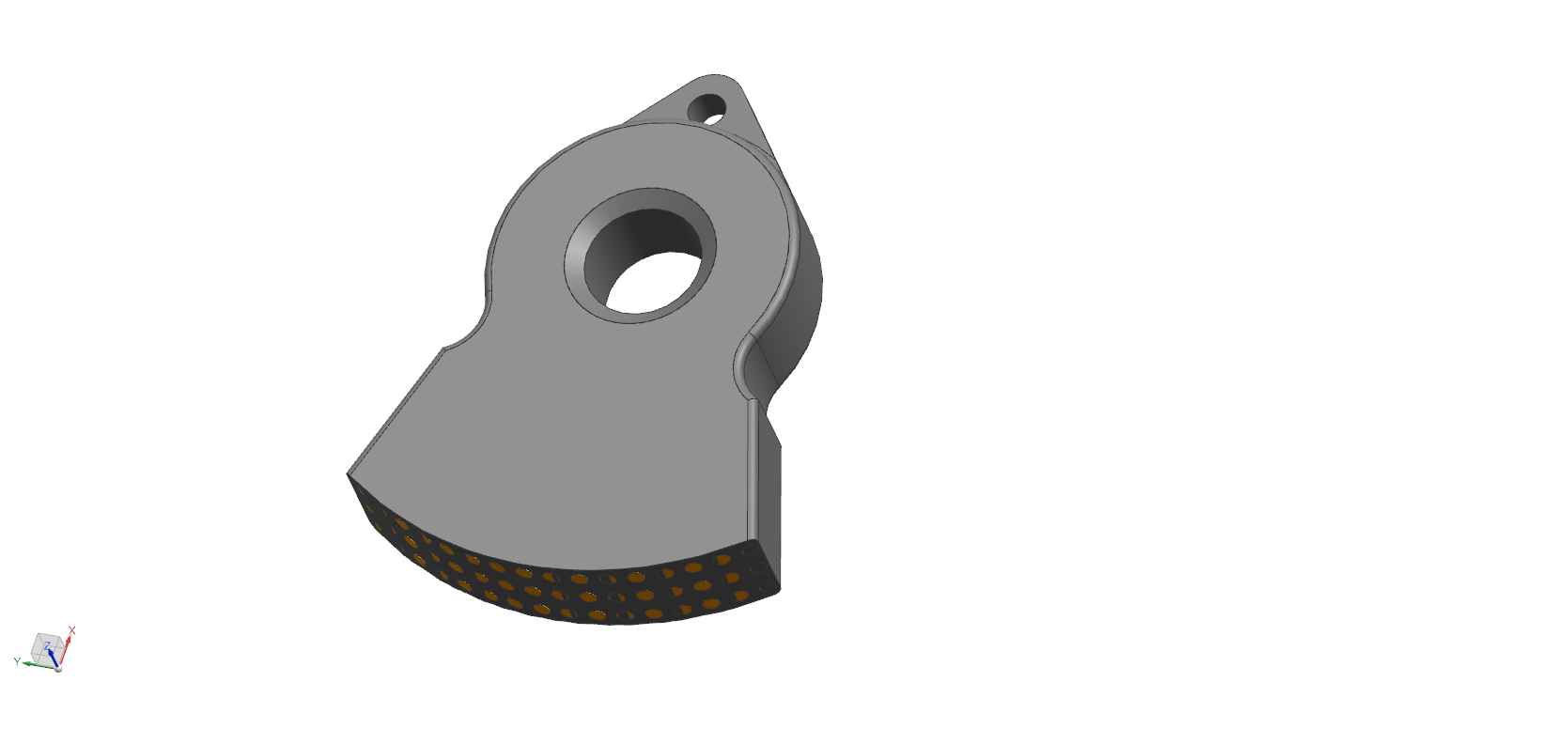
Cost per campaign: a composite hammer costs about 1.4× a plain manganese hammer and returns roughly 2× the wear life — and lands at about 75% of the price of a carbide-bar composite of the same layout.
| Item | Plain manganese hammer | CA-Alloy 60 composite |
|---|---|---|
| Striking face hardness | Work-hardens in service | 58–61 HRC from the pour |
| Impact toughness | High | 9.0–12.0 J/cm² |
| Relative price | 1.0 | ≈ 1.4 |
| Relative wear life | Baseline | ≈ 2× baseline |
| Section around the pin hole | Kept thick by design in both cases — this is where the hammer actually fails | |
Laboratory values for the wear alloy itself, not field-service guarantees. Final pricing depends on hammer weight, section and quantity.
Hammer crushers, hammer mills and shredder duty, stationary and mobile. If your machine is not listed, send the part number or a photo and we will confirm it.
Tell us the machine model and the part you are running now, and we will come back with the composite option measured against it.
A part number, a drawing, or a photo of the worn hammer with the machine model is enough for us to identify the fitment. Tell us what the feed is — that decides the section as much as the insert layout does.
How an order runs: confirm the hammer and the rotor position → check the feed and the pin section → set the insert layout and the cast section together → 3D-print the pattern and machine the mould → cast, heat-treat, machine and weigh the set.
Send us your hammerAll manufacturer names, part numbers, model numbers and descriptions are used for identification and reference purposes only. It is not implied that any part listed is the product of the original manufacturer. Wear performance figures are laboratory values for the wear alloy itself and are not field-service guarantees. Patented in China (CN106282835B).